
Navegue pelo conteúdo
Fatty Liver Diet: What to Eat and What to Avoid [Complete Guide]
Suggested slug: drjeancarlosmd.com/en/fatty-liver-diet/
Meta description: Fatty liver diet guide: 10 foods that protect your liver, what to avoid, and a 7-day meal plan. Evidence-based protocol from a functional medicine doctor.
Primary keyword: fatty liver diet
Secondary keywords: what to eat for fatty liver, best foods for fatty liver, NAFLD diet plan, liver-friendly foods, fatty liver meal plan, foods to avoid with fatty liver
LSI keywords: fructose and liver damage, insulin resistance diet, anti-inflammatory foods, cruciferous vegetables, omega-3 fatty acids, milk thistle, liver detox foods, Mediterranean diet liver, choline foods, gut health and liver
Category: Liver Health
Target audience: Americans 35-65 searching for dietary guidance for fatty liver
Why Conventional Diets Fail for Fatty Liver Disease
You received a fatty liver diagnosis and the first advice was “go on a diet and lose weight.” Sounds simple, right? But if it were that simple, NAFLD would not be the most common liver disease worldwide, affecting roughly 25% of the global population and an estimated 100 million Americans.
The problem is not a lack of effort. The problem is the approach.
The conventional fatty liver diet usually boils down to: cut calories, reduce fat, eat more fruit, and exercise. While parts of this are correct, this generic approach ignores the specific mechanisms that drive fat accumulation in the liver.
Here is the key insight that changes everything.
Your liver does not get fatty because you eat too much fat. It sounds counterintuitive, but the primary pathway for hepatic fat accumulation is de novo lipogenesis — a process in which the liver converts excess carbohydrates (especially fructose and refined sugars) into fat.
In other words: the sugar you eat turns into fat in your liver. Not the fat you eat.
This understanding completely transforms the dietary strategy. It is why many people follow “healthy” diets loaded with fruit smoothies, fruit juice, and whole grain cereals — and their fatty liver does not improve. The source of the problem is not being addressed.
In my 16 years of functional and integrative medicine practice, I have seen hundreds of patients frustrated by diets that looked perfect on paper but failed to improve their liver. The answer almost always came down to three factors:
An effective fatty liver diet must address all three. And that is exactly what this guide will help you build.
Internal link: [Fatty liver symptoms: 7 silent warning signs](drjeancarlosmd.com/en/fatty-liver-symptoms/)
The 10 Best Foods for Fatty Liver
Not every “healthy” food is good for your liver. But certain foods have robust scientific evidence of protective, anti-inflammatory, and regenerative effects on liver tissue.
Here are the 10 I recommend most in clinical practice:
1. Kale and Cruciferous Vegetables
Kale, broccoli, cauliflower, Brussels sprouts, and arugula contain compounds called glucosinolates, which convert into sulforaphane — a molecule with potent action on phase II liver detoxification enzymes.
A study published in the Journal of Nutrition showed that regular broccoli consumption reduced hepatic triglyceride accumulation in experimental models. Aim for at least 1 serving of cruciferous vegetables per day.
2. Extra-Virgin Olive Oil
Extra-virgin olive oil is rich in oleic acid and polyphenols (especially oleocanthal) with direct anti-inflammatory effects. Studies show that replacing refined vegetable oils with extra-virgin olive oil improves NAFLD markers. This aligns with the Mediterranean diet, which the AASLD recognizes as beneficial for liver health.
Tip: Use olive oil raw for dressing salads and vegetables. Avoid prolonged high-heat cooking that degrades its bioactive compounds.
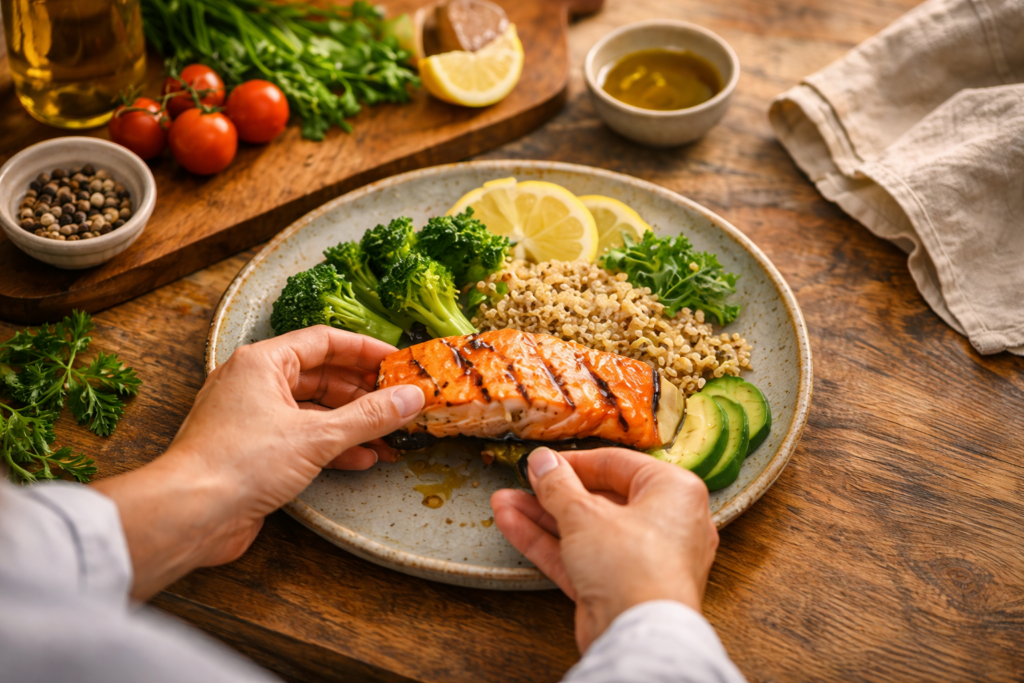
3. Wild Salmon and Fatty Fish
Rich in omega-3 fatty acids (EPA and DHA), wild salmon, sardines, and mackerel are natural anti-inflammatories. Omega-3 reduces hepatic triglycerides, improves insulin sensitivity, and modulates inflammation in liver tissue.
Goal: Eat fatty fish at least 2 to 3 times per week. The American Heart Association (AHA) recommends this frequency for overall cardiovascular and metabolic health.
4. Avocado
A source of monounsaturated fats, fiber, and glutathione — the liver's primary antioxidant. Avocado also contains compounds that inhibit liver damage, as demonstrated in a study published in the World Journal of Gastroenterology.
5. Walnuts and Tree Nuts
Walnuts, almonds, pecans, and Brazil nuts provide selenium, vitamin E, unsaturated fats, and polyphenols. Walnuts, in particular, are rich in plant-based omega-3 (ALA) and have been specifically studied for liver benefits.
Ideal portion: A small handful (about 1 oz) of mixed nuts daily.
6. Coffee (Yes, Coffee)
Good news for coffee lovers. Coffee is one of the foods with the strongest evidence of liver protection. Meta-analyzes show that 2 to 3 cups of coffee per day reduce the risk of liver fibrosis and NAFLD progression.
The responsible compounds include chlorogenic acid, cafestol, and kahweol. Drip-brewed (filtered) coffee is the most studied and recommended form.
7. Turmeric (Curcumin)
Curcumin, the active compound in turmeric, has anti-inflammatory, antioxidant, and liver-protective properties. Randomized clinical trials have shown that curcumin supplementation reduced liver enzymes and liver fat in patients with NAFLD.
Important: Curcumin has low bioavailability. Combine it with black pepper (piperine) or use formulations designed for enhanced absorption.
8. Garlic
Garlic contains allicin and sulfur compounds that activate liver detoxification enzymes. Studies show that regular garlic consumption reduces body weight and liver fat in patients with NAFLD.
Use fresh garlic, crushed and left to rest for 10 minutes before cooking to maximize allicin formation.
9. Green Tea
Rich in catechins (especially EGCG), green tea has antioxidant properties and supports the reduction of liver fat. A 2020 meta-analysis confirmed that regular green tea consumption improves NAFLD markers.
Caution: In very high doses (concentrated supplements), green tea extract can paradoxically cause liver toxicity. Stick to the natural form: 2 to 3 cups per day.
10. Eggs (Especially the Yolk)
Egg yolk is the top dietary source of choline — an essential nutrient that most Americans do not get enough of. Choline is critical for transporting fat out of the liver (VLDL export).
Choline deficiency is directly associated with hepatic fat accumulation. The NIH estimates that over 90% of the US population does not meet adequate choline intake. Two eggs per day is a simple, affordable strategy.
The Fructose Trap — The Sugar That Fattens Your Liver
If there is one dietary villain for your liver, it has a name: fructose.
I am not talking about the fructose in a whole apple or a handful of berries. I am talking about industrial fructose, added in massive quantities to sodas, bottled fruit juices, candy, cookies, granola bars, ketchup, salad dressings, and dozens of ultra-processed foods sold in every American grocery store.
Fructose is metabolized almost exclusively by the liver. Unlike glucose, which can be used by every cell in the body, fructose goes straight to the liver, where it is converted into fat through de novo lipogenesis.
[WHAT THE SCIENCE SAYS]
A study published in the Journal of Hepatology (2021) demonstrated that just 3 weeks of high fructose consumption were enough to increase liver fat by 27% in healthy individuals, while also raising inflammatory markers and insulin resistance. Researchers compared isocaloric diets (same total calories) with different sugar sources and concluded that fructose is significantly more hepatotoxic than glucose, even at equal calorie amounts.
Reference: Schwarz JM et al. “Effects of Dietary Fructose Restriction on Liver Fat, De Novo Lipogenesis, and Insulin Kinetics.” Journal of Hepatology, 2021.
What You Need to Eliminate or Drastically Reduce:
What About Whole Fruits?
Whole fruits, eaten with their skin and fiber, are acceptable in moderation. The fiber in whole fruit slows fructose absorption and reduces the hepatic impact.
My recommendation: Limit fruit to 2 servings per day, preferably lower-fructose options (berries, kiwi, grapefruit, lemon) and avoid large quantities of high-fructose fruits (mangoes, grapes, ripe bananas, figs).
Internal link: [Hidden sugar: 12 foods sabotaging your health](drjeancarlosmd.com/en/hidden-sugar-foods/)
7-Day Meal Plan for a Healthy Liver
This meal plan is a general template based on the principles I use in clinical practice. It does not replace individualized nutritional guidance, but it provides a solid starting point for anyone looking to support liver health through diet.
Core principles:
Day 1 — Monday
Breakfast: 2 scrambled eggs with spinach and tomato + 1 slice of sourdough bread + black drip coffee (no sugar)
Lunch: Grilled wild salmon + brown rice + broccoli sauteed in olive oil + arugula and walnut salad
Snack: A handful of mixed nuts + 1 cup of green tea
Dinner: Vegetable and chicken soup + 1 tablespoon of extra-virgin olive oil drizzled on top
Day 2 — Tuesday
Breakfast: Plain Greek yogurt + 1 tablespoon of ground flaxseed + fresh strawberries
Lunch: Herb-grilled chicken breast + mashed sweet potato + garlic-sauteed kale + colorful side salad
Snack: 1/2 avocado with lemon juice and a pinch of sea salt
Dinner: 2-egg omelet with mushrooms, onion, and tomato + mixed green salad
Day 3 — Wednesday
Breakfast: Smoothie: spinach + avocado + coconut milk + 1 tsp turmeric + fresh ginger
Lunch: Baked sardines + roasted sweet potato + red cabbage and carrot slaw + olive oil and lemon dressing
Snack: 3 Brazil nuts + 1 small Granny Smith apple
Dinner: Large salad with shredded chicken, avocado, hard-boiled eggs, tomato, cucumber, and olive oil
Day 4 — Thursday
Breakfast: 2 hard-boiled eggs + 1 slice of whole grain toast with mashed avocado + drip coffee
Lunch: Grilled lean beef (sirloin) + brown rice + sauteed green beans + raw beet salad
Snack: 1 cup of green tea + a handful of almonds
Dinner: Oven-baked white fish (cod or tilapia) with roasted vegetables (zucchini, eggplant, bell pepper)
Day 5 — Friday
Breakfast: Banana-egg pancakes (1 small banana + 2 eggs) + cinnamon + coffee
Lunch: Herb-crusted baked salmon + cauliflower mash + mixed green salad with walnuts
Snack: Carrot and cucumber sticks with homemade hummus
Dinner: Lentil and vegetable soup + 1 tablespoon of extra-virgin olive oil
Day 6 — Saturday
Breakfast: Scrambled eggs with tomato and avocado on a corn tortilla + drip coffee
Lunch: Roasted rosemary chicken + baked sweet potato + broccoli roasted in olive oil + side salad
Snack: 1/2 avocado with cacao powder and a pinch of cinnamon
Dinner: Lettuce wrap with seasoned ground turkey, tomato, onion, and natural spices
Day 7 — Sunday
Breakfast: Poached eggs over sliced tomato with olive oil and oregano + coffee
Lunch: Fish stew with coconut milk (from the can, full-fat, no additives) + brown rice + coleslaw
Snack: Green tea + 3 Brazil nuts + 3 walnuts
Dinner: Composed salad with canned tuna (in olive oil), eggs, olives, cherry tomatoes, arugula, and olive oil
> Note: This meal plan is an educational template. Portions, quantities, and substitutions should be adjusted based on your individual needs, dietary restrictions, and professional guidance.
Evidence-Based Supplements for Fatty Liver Disease
Diet is the foundation. But in many NAFLD cases, targeted supplements can accelerate improvement and correct deficiencies that diet alone cannot resolve.
Here are the supplements with the strongest level of scientific evidence for NAFLD:
1. Omega-3 (EPA + DHA)
Studied dose: 2 to 4 grams/day of combined EPA + DHA.
Omega-3 reduces hepatic triglycerides, improves insulin sensitivity, and modulates liver inflammation. It has the largest body of positive research for NAFLD. Choose high-purity, high-concentration sources. The AHA supports omega-3 for triglyceride management.
2. Milk Thistle (Silymarin)
Studied dose: 420 to 600 mg/day of standardized silymarin.
A classic liver-protective compound with antioxidant, anti-inflammatory, and anti-fibrotic properties. Silymarin protects liver cell membranes and stimulates hepatic tissue regeneration. Clinical trials show reductions in liver enzymes and histological improvement.
3. Berberine
Studied dose: 500 mg, 2 to 3 times daily.
Berberine directly targets insulin resistance — one of the central mechanisms driving NAFLD. Studies compare it to metformin in efficacy. It also reduces triglycerides and improves lipid profiles.
4. N-Acetylcysteine (NAC)
Studied dose: 600 to 1,200 mg/day.
A precursor to glutathione, the liver's most important antioxidant. NAC restores hepatic glutathione stores, protecting cells against oxidative stress — a central factor in the progression from simple steatosis to NASH.
5. Vitamin E (Mixed Tocopherols)
Studied dose: 400 to 800 IU/day.
Vitamin E is one of the few supplements recommended by the AASLD clinical guidelines for NASH in non-diabetic patients. Choose formulations with mixed tocopherols (not just isolated alpha-tocopherol).
6. Choline
Studied dose: 500 to 1,000 mg/day.
Essential for transporting fat out of the liver. Choline deficiency is extremely common and underdiagnosed in the US. Dietary sources include eggs, liver, and soy, but supplementation may be necessary for many individuals.
7. Curcumin (Bioavailability-Enhanced)
Studied dose: 500 to 1,500 mg/day (phytosome or piperine-enhanced formulations).
Anti-inflammatory and antioxidant action in the liver. Studies show reductions in liver fat and improvements in liver enzymes with consistent use over 8 to 12 weeks.
[CLINICAL CASE]
Patient: Robert, 54, Chicago, Illinois (online consultation with follow-up labs coordinated with his local provider).
Robert is a business executive who works long hours and frequently eats out. He contacted our practice after receiving an ultrasound showing grade III fatty liver disease. His labs revealed: ALT of 78 U/L (elevated), triglycerides of 340 mg/dL, fasting insulin of 24 uIU/mL, and fasting glucose of 112 mg/dL (prediabetes range).
His dietary history showed daily consumption of 2 cans of soda, 2 glasses of “fresh” orange juice, frequent fast-food meals, and virtually no green vegetables.
The protocol included:
After 6 months of follow-up:
“I was drinking orange juice every morning thinking it was healthy. Nobody ever explained what fructose was doing to my liver.” — Robert.
Fictional clinical case based on real-world scenarios. Individual results may vary.
> Disclaimer: The supplements listed above have scientific evidence, but they should not be used without professional guidance. Inappropriate doses, drug interactions, and individual contraindications must be evaluated on a case-by-case basis.
Ready to take the next step toward improving your fatty liver?
Visit: [drjeancarlosmd.com/en/fatty-liver-natural-treatment/](https://drjeancarlosmd.com/en/fatty-liver-natural-treatment/) and download the complete guide with a detailed dietary protocol, supplement list, and step-by-step action plan.
Internal link: [Fatty liver: the complete guide to understanding and improvement](drjeancarlosmd.com/en/fatty-liver-complete-guide/)
FAQ — Frequently Asked Questions About the Fatty Liver Diet
Schema markup: FAQPage
1. What is the best diet for fatty liver disease?
The best dietary approach for NAFLD is an anti-inflammatory diet rich in vegetables (especially cruciferous varieties like kale and broccoli), quality proteins, and healthy fats (olive oil, avocado, omega-3 from fish) — and low in added sugar, industrial fructose, and ultra-processed foods. It is not just about cutting calories. It is about eliminating the foods that overload the liver and including those that promote its regeneration. The Mediterranean diet pattern is the most studied and recommended by both the AASLD and the NIH.
2. Can you eat eggs if you have fatty liver?
Yes, and it is recommended. Eggs — especially the yolk — are the top dietary source of choline, an essential nutrient for fat metabolism in the liver. Choline deficiency is directly associated with hepatic fat accumulation. Eating 2 eggs per day is safe and beneficial for most people with NAFLD.
3. Is fruit bad for fatty liver?
Whole fruits, eaten with their skin and fiber, can be consumed in moderation (2 servings per day). The real problem is excess fructose from industrial sources (juices, sodas, HFCS). Berries, kiwi, and grapefruit are lower-fructose options. Avoid large quantities of mangoes, grapes, and ripe bananas.
4. What foods should you absolutely avoid with fatty liver?
The foods most damaging to a fatty liver are: sodas (regular and diet), bottled fruit juices, processed candy and cookies, foods fried in refined vegetable oils, processed deli meats (hot dogs, lunch meats, commercial bacon), fast food, products containing high-fructose corn syrup, and alcohol. Eliminating these is the single most impactful first step.
5. Do liver supplements actually work for fatty liver?
Yes, several supplements have solid scientific evidence supporting their role in NAFLD management. The most studied are: omega-3 (EPA/DHA), milk thistle (silymarin), berberine, N-acetylcysteine (NAC), and vitamin E. However, supplements are complements — they do not replace a proper diet, regular exercise, and medical follow-up. Always use them under professional guidance.
Suggested internal links for this article: