
Navegue pelo conteúdo
- What Is Biochemical Divorce — And Why Most Couples Don't Recognize It Until It's Advanced
- Signs 1–5: The Physical Signals Your Body Is Sending That Your Relationship Is Paying For
- Signs 6–10: The Libido and Intimacy Collapse That Goes Beyond ‘Not Being in the Mood'
- Signs 11–15: Emotional Withdrawal, Numbness, and the Slow Disappearance of Tenderness
- Signs 16–20: Cognitive and Communication Patterns That Mimic Relational Incompatibility
- Signs 21–27: The Advanced Markers That Indicate Hormonal Dysregulation Is Running the Show
- How to Score Your Checklist and What Your Results Actually Mean
- The Difference Between Biochemical Divorce and a Genuinely Broken Relationship
- When to Seek Functional Testing Versus When to Prioritize Couples Counseling
- What Couples Who Scored High on This Checklist Did Next — and What Worked
- Frequently Asked Questions
27 Signs of Biochemical Divorce: The Checklist Every Couple Over 45 Needs to See
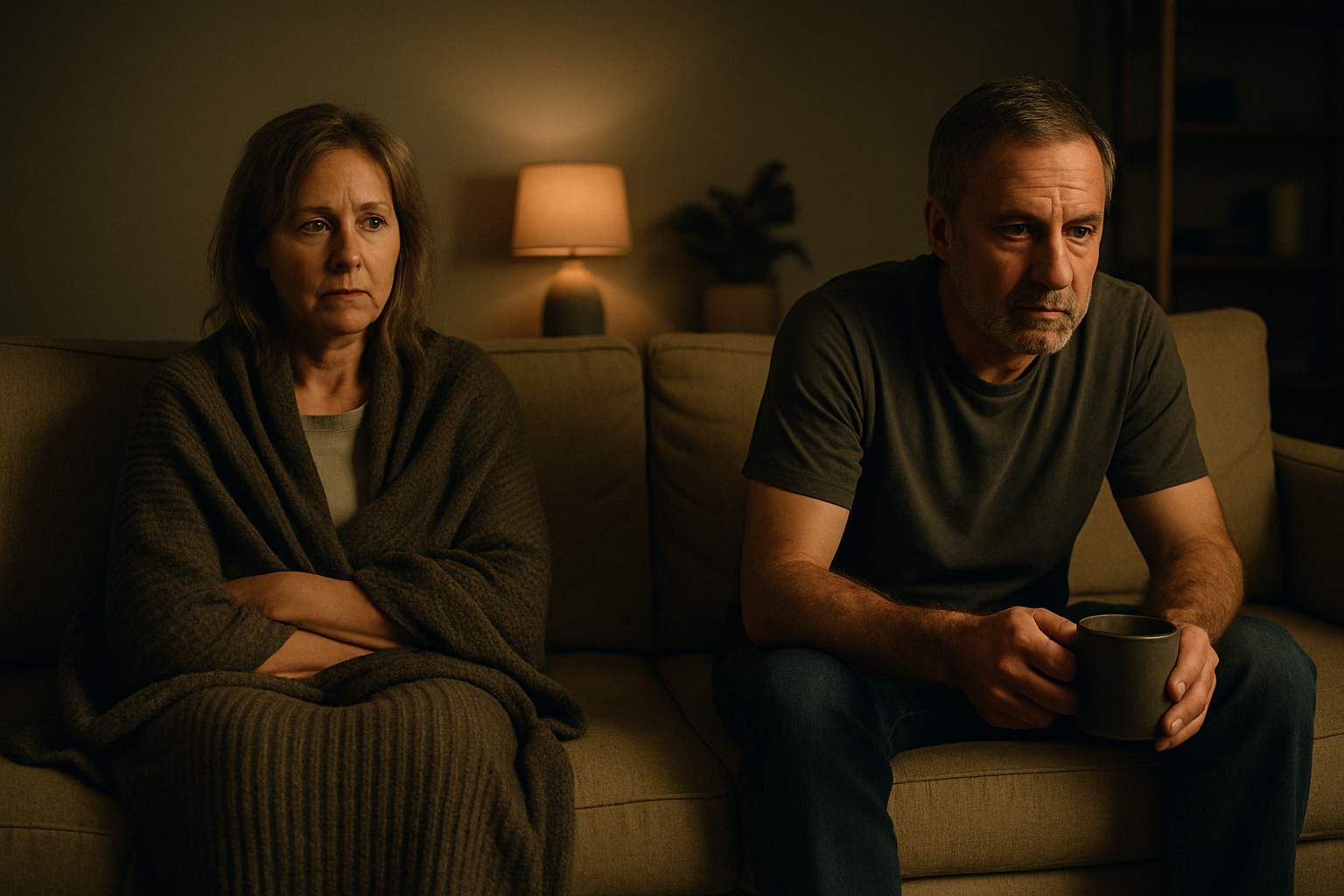
You don't wake up one morning and decide to emotionally leave your marriage. It happens in millimeters — one skipped kiss, one ignored touch, one night turned away in bed.
And then one day, you look at the person across the breakfast table and realize that the warmth you once felt has been replaced by something flat. Neutral. Distant.
Most couples assume this is the natural end of passion. They call it “growing apart.” Some call it incompatibility. A few quietly begin planning an exit.
But in my 16 years of functional integrative medicine — and across more than 28,000 patients — I've seen something different. I've seen couples who were convinced their relationship was over discover that their biochemistry was failing, not their love.
Loss of libido in couples over 50 isn't primarily a relationship problem. It's a hormonal signal that most physicians miss entirely. And when both partners are experiencing hormonal dysregulation simultaneously — which happens far more often than anyone acknowledges — the results can look exactly like a broken marriage.
Before you blame your partner, read this checklist. The 27 signs below are what I look for in clinical practice when I suspect that biology is running — and ruining — a relationship.
What Is Biochemical Divorce — And Why Most Couples Don't Recognize It Until It's Advanced
Biochemical divorce is a term I coined to describe a specific clinical pattern: two partners, both experiencing hormonal disruption, who are mistakenly interpreting their physiological symptoms as emotional incompatibility.
It is not a metaphor. It is a measurable, testable, treatable condition.
What makes it particularly dangerous is that it mimics every surface-level symptom of genuine relational breakdown. Emotional withdrawal. Irritability. Loss of interest in physical intimacy. Feeling like strangers. Preferring solitude.
A study published by Harvard Medical School (2018) found that low testosterone in men and declining estradiol in women both independently produce symptoms that are clinically indistinguishable from depression and social withdrawal. When both are occurring simultaneously in a couple — which becomes statistically likely after age 47 — the relational fallout is dramatic.
The tragedy is that most couples walk into a marriage counselor's office when they should first walk into a functional medicine clinic. Not because therapy is wrong — but because no amount of communication coaching will fix cortisol dysregulation, thyroid suppression, or estrogen collapse.
This checklist is designed to help you see which domain is actually driving the problem. Go through each sign slowly. Mark every one that applies to either partner. The score matters less than the pattern.
Signs 1–5: The Physical Signals Your Body Is Sending That Your Relationship Is Paying For
These first five signs are somatic — meaning they live in the body before they surface in the relationship. Most couples never connect the physical and emotional, which is precisely why biochemical divorce goes undetected for years.
Sign 1: Persistent, unrefreshing fatigue
You sleep seven or eight hours and wake up exhausted. You feel drained by mid-afternoon regardless of what you ate or how much you rested. This is not laziness. It is a hallmark of cortisol dysfunction, thyroid suppression, or mitochondrial burnout — all of which accelerate after 45.
Sign 2: Unexplained weight gain, especially around the abdomen
Visceral fat accumulation in both men and women after 45 is strongly linked to declining testosterone and estrogen, rising cortisol, and insulin resistance. The Lancet (2021) reported that abdominal adiposity in midlife is one of the strongest predictors of hormonal dysregulation in both sexes.
Sign 3: Disrupted sleep — waking between 2 and 4 a.m.
This specific pattern is a classic cortisol spike signature. When the adrenal glands misfire during the night, they jolt you awake during what should be deep restorative sleep. Partners with this pattern often report lying awake ruminating about the relationship — when the true culprit is hormonal, not psychological.
Sign 4: Recurring joint pain, muscle stiffness, or reduced physical resilience
Estrogen and testosterone both have anti-inflammatory properties. As they decline, systemic inflammation rises. This shows up as morning stiffness, joint aches without injury, and a general sense of physical fragility that makes touch feel less appealing and activity feel burdensome.
Sign 5: Skin changes, hair thinning, or decreased physical confidence
Hormonal decline accelerates aging-related skin changes — dryness, loss of elasticity, thinning scalp hair. When both partners are experiencing these changes, physical self-consciousness can silently erode desire for intimacy long before either person consciously names it.
Signs 6–10: The Libido and Intimacy Collapse That Goes Beyond ‘Not Being in the Mood'
Loss of libido in couples over 50 is the most discussed and least understood symptom in this entire cluster. Here is what the science actually says: it is not primarily psychological. It is biochemical, systemic, and often bidirectional.
Sign 6: Loss of spontaneous sexual desire
You no longer experience desire that arises on its own. You might respond if initiated, but the internal drive — the wanting — is simply gone. This is not a character flaw. It is what testosterone deficiency feels like in clinical practice, in both men and women.
Sign 7: Avoidance of physical contact, including non-sexual touch
When oxytocin production decreases — which happens as estrogen falls in women and as social bonding behaviors shift in men under androgen decline — even casual physical affection begins to feel effortful. Holding hands. A hand on the shoulder. A quick kiss. All of it quietly disappears.
Sign 8: Physical discomfort during or after intercourse
Vaginal dryness and atrophy in women, erectile changes and reduced sensitivity in men — these are direct consequences of estrogen and testosterone deficiency. When sex becomes physically uncomfortable or mechanically difficult, avoidance is not a relationship choice. It's a protective response to pain.
Sign 9: Feeling irritated or crowded by your partner's physical presence
A heightened stress response — driven by elevated cortisol and dysregulated DHEA — can make your nervous system interpret closeness as a threat rather than comfort. Partners describe this as feeling suffocated or overwhelmed by proximity that used to feel safe.
Sign 10: Initiating sex feels pointless or emotionally hollow
Even when intercourse occurs, one or both partners describe it as mechanical. There is physical activity but no emotional resonance. This dissociation between body and connection is a known neurological consequence of low dopamine and oxytocin, both of which are modulated by gonadal hormones.

Signs 11–15: Emotional Withdrawal, Numbness, and the Slow Disappearance of Tenderness
This is the cluster that most often sends couples to therapy. And while therapy is valuable, it cannot address what is fundamentally happening here: the biochemical suppression of prosocial emotion.
Sign 11: Emotional flatness — nothing feels very exciting or very meaningful
This is called anhedonia in clinical language. It is a hallmark of low dopamine and serotonin — both of which are directly influenced by estrogen and testosterone levels. When the relationship feels “fine but empty,” this is often the driving mechanism.
Sign 12: Inability to feel genuine tenderness toward your partner
You remember caring deeply. You want to care. But the warmth doesn't come. Partners describe watching their spouse in a moment that used to move them — and feeling nothing. This emotional blunting is one of the most distressing symptoms of biochemical divorce, and it is consistently correctable with proper hormonal support.
Sign 13: Preferring solitude over shared time
Social withdrawal is a documented symptom of both low testosterone in men and perimenopausal hormonal shifts in women. When being alone consistently feels better than being together — not because of conflict, but simply because togetherness requires energy you don't have — this is a biochemical signal.
Sign 14: Reduced empathy — difficulty caring about your partner's emotional needs
Oxytocin, the primary bonding hormone, requires adequate estrogen for expression and adequate testosterone for motivational drive. When both decline simultaneously — which is exactly what happens when menopause and andropause at the same time occur — empathic capacity shrinks measurably.
Sign 15: Feeling like roommates rather than romantic partners
This is the description I hear most often in my clinic. Couples who manage the household together, who are functionally cooperative, but who feel no relational electricity. No pull toward each other. It is the most advanced form of emotional withdrawal before one partner begins entertaining the idea of separation.
Signs 16–20: Cognitive and Communication Patterns That Mimic Relational Incompatibility
These signs are the most dangerous because they look exactly like personality incompatibility. They send couples directly to divorce attorneys rather than to functional medicine labs. But each one has a biochemical mechanism that is well-documented in the scientific literature.
Sign 16: Increased irritability and low frustration tolerance
Small things provoke disproportionate reactions. A comment that would have been harmless years ago now sparks a conflict. This is the neurological signature of chronic cortisol elevation combined with declining progesterone — a combination that leaves the amygdala in a state of near-constant activation.
Sign 17: Brain fog and declining conversational engagement
When estrogen drops, verbal fluency and working memory decline measurably. UCLA Neurology (2020) documented significant cognitive changes in perimenopausal women that resolve with hormonal support. When a partner becomes less verbally engaging, the other often interprets it as disinterest — when it is actually a symptom of hormonal cognitive suppression.
Sign 18: Conversations that feel transactional or logistical rather than connective
You talk about the grocery list, the bills, the children's schedule. But you no longer talk about ideas, dreams, feelings, or each other. When both partners' dopamine systems are suppressed by hormonal deficiency, the motivational drive to seek meaningful connection is physiologically diminished.
Sign 19: Hypersensitivity to criticism — everything feels like an attack
Declining progesterone in women and low testosterone in men both reduce emotional buffering capacity. The nervous system becomes raw. Feedback that was once received neutrally now feels like rejection. This creates a cycle where both partners begin self-censoring, which accelerates the emotional disconnect.
Sign 20: Feeling chronically misunderstood or invisible in the relationship
This is often framed as a communication failure. But when both partners are operating under hormonal cognitive and emotional suppression, the capacity to attune to each other's inner world is genuinely diminished — not as a choice, but as a neurobiological reality.
Signs 21–27: The Advanced Markers That Indicate Hormonal Dysregulation Is Running the Show
If you recognize yourself in the signs below, the hormonal component of your relational distress is likely dominant. These are the markers that appear after months or years of unaddressed biochemical imbalance — and they are the ones most frequently misread as permanent personality changes.
Sign 21: Complete indifference to your partner's daily life or wellbeing
Not hostility. Not resentment. Just a profound absence of interest. You don't ask how their day was — not because you're angry, but because you simply don't feel the impulse. This level of relational apathy is a red flag for advanced oxytocin and dopamine suppression.
Sign 22: Fantasizing about being single — not for another person, but for solitude
Many patients describe this as not wanting a new partner — just wanting to be alone. This is subtly different from infidelity-driven dissatisfaction. It reflects a hormonal state where social energy is so depleted that even a loving relationship feels like a burden.
Sign 23: Passive-aggressive behavior replacing direct communication
When the prefrontal cortex is functionally suppressed by chronically elevated cortisol, direct emotional expression becomes neurologically difficult. The result is indirect, sideways communication — what therapists label passive-aggressive but what a functional medicine lens recognizes as a cortisol-driven behavioral pattern.
Sign 24: Increasingly separate lives with no desire to reconnect
Separate bedrooms, separate social lives, separate meals. Not due to conflict — due to the absence of the biological drive to seek proximity. In healthy hormonal states, pair-bonding hormones actively pull partners toward each other. When those hormones are gone, so is the pull.
Sign 25: Persistent low-grade depression with no identifiable cause
You feel low. Not acutely sad, not in crisis — just persistently gray. Life feels muted. This subclinical depression is one of the most common presentations of hormonal deficiency after 47, and it responds poorly to antidepressants alone when the underlying biochemistry is not addressed. JAMA Psychiatry (2022) documented this gap in standard treatment protocols.
Sign 26: History of failed attempts to "fix" the relationship through conversation or counseling
If you've done the therapy, had the honest conversations, read the books, and still feel the same distance — this is a clinically important data point. It strongly suggests the problem is not primarily communicative. It is biochemical, and it requires a biochemical intervention alongside any relational work.
Sign 27: A quiet, persistent inner conviction that the relationship is "just over"
This one is the most heartbreaking. Patients describe it as a certainty that arrived slowly, without drama. They no longer feel angry or hurt — they just feel done. In a significant percentage of cases I've observed clinically, this conviction dissolves entirely within 90 days of targeted hormonal and nutritional intervention. That does not mean the relationship is always worth saving — but it means you should not make that decision while your hormones are in crisis.
How to Score Your Checklist and What Your Results Actually Mean
Go back through the 27 signs and count how many apply to you and how many apply to your partner. Tally them separately, then combine.
- 1–6 signs total: Low urgency, but hormonal screening is still worthwhile after 45. Begin with lifestyle optimization.
- 7–12 signs total: Moderate concern. Request comprehensive functional hormonal tests from a specialist. Do not make any permanent relationship decisions until results are reviewed.
- 13–20 signs total: High concern. Both partners should be evaluated. Hormonal dysregulation is almost certainly a primary driver. Combined functional medicine and relational support is indicated.
- 21–27 signs total: Advanced stage. The hormonal environment is dominating the relationship narrative. Urgent evaluation and the CB5 90-day protocol is the appropriate starting point. Do not separate before getting tested.
One important caveat: this is a clinical screening tool, not a diagnostic instrument. A high score indicates probability, not certainty. The purpose is to point you toward the right kind of professional support — not to replace it.
The Difference Between Biochemical Divorce and a Genuinely Broken Relationship
This distinction is the ethical core of everything I do in this space. Not every struggling relationship is biochemical divorce. Some relationships are genuinely over — marked by incompatibility, betrayal, sustained disrespect, or values that have grown irreconcilably apart.
The clinical question I ask is this: were things meaningfully different before? If the distance, the coldness, and the loss of desire emerged gradually after 45 — without a defining betrayal or a fundamental values conflict — then hormonal evaluation is not optional. It is obligatory.
Biochemical divorce has a specific fingerprint: the deterioration is gradual, bilateral, and tightly correlated with the hormonal timeline. Both partners change simultaneously. Neither one can point to a moment when things broke. It just… faded.
A genuinely broken relationship has a different pattern. There are specific ruptures. There is asymmetry — one partner feels more than the other. There is often a clear timeline of when trust was lost or respect was eroded. These relationships may benefit from therapy, mediation, or ultimately separation. But they should not be confused with hormonal collapse.
The most important thing I can tell you is this: do not confuse a diagnosis for a verdict. High scores on this checklist mean you need medical support — not that your marriage is doomed.
When to Seek Functional Testing Versus When to Prioritize Couples Counseling
This is the question I am asked most frequently by couples who score in the mid-range on this checklist. The honest answer is that it is rarely one or the other. But the sequencing matters enormously.
Start with functional testing first if:
- The emotional distance appeared without a clear relational trigger
- Loss of libido is present in one or both partners
- Physical symptoms (fatigue, sleep disruption, weight gain) are also present
- Either partner is over 45
- Previous couples counseling produced minimal lasting change
The minimum panel I recommend for this clinical picture includes: total and free testosterone, estradiol, progesterone, DHEA-S, cortisol (4-point salivary), fasting insulin, TSH with free T3 and T4, and a full inflammatory panel. You can find the complete list in the functional hormonal tests resource linked in this article.
Prioritize couples counseling first if:
- There has been infidelity or a major breach of trust
- Communication has become hostile or contemptuous
- One partner is actively planning to leave
- There are unresolved historical grievances that both partners can articulate clearly
Even in these cases, I recommend parallel hormonal evaluation. The two interventions are not mutually exclusive. They are, in fact, most powerful when combined — particularly when hormone replacement for couples is integrated alongside structured therapeutic support.
What Couples Who Scored High on This Checklist Did Next — and What Worked
Across years of clinical practice, I've tracked what actually moved the needle for couples presenting with biochemical divorce patterns. The data is consistent enough to be instructive.
The couples who improved most significantly shared three behaviors in common.
First: they got tested together. Not one partner, then the other months later. Together, at the same time. This reframed the problem from "what's wrong with you" to "what's happening to us." That shift alone was therapeutically significant before a single result came back.
Second: they followed a structured protocol with clear milestones. The CB5 90-day protocol outlined in the book was designed specifically for this stage — not as a vague wellness plan, but as a sequenced intervention that addresses cortisol first, then gonadal hormones, then metabolic function, then relational repair.
Third: they were patient with the timeline. Hormonal recovery is not immediate. Most couples reported meaningful improvement in physical energy and mood within 30 days. Libido and emotional warmth typically began recovering between weeks 6 and 12. Full relational restoration, when it occurred, was usually evident by the 90-day mark.
The couples who did not improve were, in most cases, those who addressed the hormonal component in only one partner. Biochemical divorce, by definition, is a bilateral condition. It requires a bilateral solution.
If you scored high on this checklist, do not sit with the data alone. The next step is information and action — not rumination.
Next in this series: High Cortisol Is Killing Your Sex Life — the biochemistry every couple needs to understand. Or if you're ready to begin now, the complete framework is available in the book on
📖 Acessar o livro na Amazon
Deixe seu nome e email — você recebe um bônus exclusivo + acesso direto ao livro.
Frequently Asked Questions
How do I know if my loss of libido is hormonal or psychological?
The most reliable differentiator is onset pattern and associated symptoms. Hormonal loss of libido tends to develop gradually after 45, is accompanied by fatigue, sleep disruption, and mood flatness, and is bilateral — meaning both partners experience it around the same time. Psychological libido loss is more often tied to a specific event, relationship dynamic, or mental health condition. Blood and salivary hormone testing provides objective data. A functional medicine physician can help you map the clinical picture against your lab results and determine whether the primary driver is biochemical, psychological, or — as is frequently the case — both simultaneously.
Is it normal to have almost no physical affection with my spouse after 50?
It is common — but common and normal are not the same thing. The progressive decline in physical affection that many couples experience after 50 is frequently a direct consequence of falling oxytocin, testosterone, and estrogen levels. These hormones are the neurochemical foundation of bonding behavior. When they decline unaddressed, the biological drive for closeness diminishes. This is not a relationship verdict. Research from Stanford Behavioral Science (2019) demonstrated that physical affection in long-term couples is strongly predicted by hormonal status in both partners — and that it can be meaningfully restored with appropriate intervention.
Can loss of libido at 50 be reversed, or is it just part of aging?
The widespread belief that libido loss is an irreversible feature of aging is one of the most clinically consequential myths I encounter. The scientific literature is unambiguous: hormonal decline is a treatable condition, not an inevitable permanent state. The New England Journal of Medicine (2019) published data showing that testosterone therapy in men with confirmed deficiency significantly improved libido, energy, and mood. Similar findings exist for estrogen and progesterone therapy in women. The key is accurate diagnosis followed by individualized, monitored treatment — not a generic supplement regimen or resigned acceptance.
My partner doesn't want to admit something is wrong — how do I bring this up?
This is one of the most common relational obstacles I hear from patients. The most effective approach is to frame the conversation around shared physical symptoms rather than relational complaints. Saying "I've been exhausted and I'm not sleeping well — I want us both to get checked out" lands very differently than "I think we have a problem." Leading with your own experience, rather than your partner's behavior, removes defensiveness from the equation. Sharing an article like this one — or the book — as a starting point for a conversation rather than an accusation can also open the door without triggering shame or denial.
How many of these 27 signs need to be present to be concerned?
There is no universal threshold, but clinically I begin to pay close attention when a couple presents with seven or more combined signs, particularly when those signs span both the physical and emotional clusters. The significance is less about total number and more about pattern. A cluster of signs from multiple categories — physical, libido, emotional, and cognitive — that appeared gradually and simultaneously in both partners is a much stronger signal than a higher number of signs concentrated in one domain. If you are above 45 and recognize yourself in even five of these signs, a hormonal panel is a reasonable and low-risk first step.
Are these signs the same for men and women, or different?
The underlying mechanisms differ, but many of the clinical presentations overlap significantly. Women in perimenopause experience libido loss, cognitive changes, emotional reactivity, and fatigue primarily through estrogen and progesterone decline. Men in andropause experience the same cluster primarily through testosterone deficiency. The important insight is that both processes tend to occur on roughly overlapping timelines — typically between ages 45 and 58 — which is precisely why the relational impact is so pronounced. Both partners are hormonally disrupted at the same time, amplifying each other's symptoms rather than compensating for them.
Can antidepressants or other medications cause some of these signs?
Yes — and this is a critically under-discussed clinical issue. SSRIs and SNRIs, the most commonly prescribed antidepressants, are among the most potent libido suppressants in pharmacology. They also reduce emotional range, blunt orgasmic response, and can increase emotional numbness in ways that directly mimic biochemical divorce. Beta-blockers, proton pump inhibitors, certain statins, and oral contraceptives also have documented hormonal effects. A thorough medication review is always part of my intake process for couples presenting with these symptoms. If you are on any of these medications, discuss alternatives or adjunctive support with your prescribing physician before assuming the issue is purely relational.
Is emotional numbness in marriage always a sign of hormonal issues?
Not always, but more often than most clinicians acknowledge. Emotional numbness can also be a symptom of chronic stress, unresolved grief, dissociative responses to relationship trauma, or long-standing depression. The differentiating question in my clinical practice is: did this numbness arrive gradually and without a clear psychological trigger? If yes, and if the patient is over 45, hormonal evaluation is warranted. In many cases I see, numbness has both a psychological and a biochemical component — and treating only one produces incomplete results. The combination of functional medicine and appropriate therapeutic support is consistently more effective than either alone.
What's the first test a doctor should run when a couple reports these symptoms?
The minimum useful starting panel in my practice includes total testosterone, free testosterone, estradiol, DHEA-S, a 4-point salivary cortisol profile, fasting insulin, TSH with free T3 and free T4, and a high-sensitivity CRP as an inflammatory marker. Standard serum testosterone alone is inadequate because it misses the free fraction that is biologically active. Many patients I've seen have been told their testosterone is "normal" based on total serum values, when their free testosterone is clinically deficient. Salivary cortisol is essential because it maps the diurnal rhythm — the pattern matters as much as the absolute levels. I strongly recommend the downloadable functional tests guide linked in this article for a complete reference.
How quickly can symptoms improve once hormonal treatment is started?
The timeline varies by individual and by the specific hormones being addressed, but the general pattern I observe clinically is this: energy and sleep quality typically improve within the first two to four weeks of effective treatment. Mood stabilization and reduction in irritability follow in weeks three through six. Libido and physical desire are among the later symptoms to recover, typically showing meaningful improvement between weeks six and twelve. Emotional warmth and relational connection — the deeper relational symptoms — often take the full 90-day cycle to re-emerge, particularly when the deficit has been present for years. Patience and consistent monitoring during this period are essential.