
Navegue pelo conteúdo
- Why Standard Blood Work Leaves Couples Without Real Answers
- The Difference Between Conventional and Functional Hormone Testing — It's Not Just Semantics
- The Complete Female Hormone Panel: What to Test, When, and Why the Timing Matters
- The Complete Male Hormone Panel: Total Testosterone Is Only the Beginning
- The Thyroid Story Nobody Tells You: Why TSH Alone Is Not Enough
- Cortisol Mapping With a 4-Point Salivary Panel: What Your Cortisol Rhythm Reveals About Your Marriage
- Insulin, Blood Sugar, and SHBG: The Metabolic Factors That Sabotage Hormone Balance
- Nutrient Deficiencies That Masquerade as Hormonal Problems in Couples Over 45
- How to Talk to Your Doctor About Ordering Functional Tests — Without Being Dismissed
- Building Your Couple's Hormonal Baseline: A Testing Roadmap for the Next 90 Days
- Frequently Asked Questions
The Functional Hormonal Tests Your Gynecologist and Urologist Aren't Ordering — But You Desperately Need
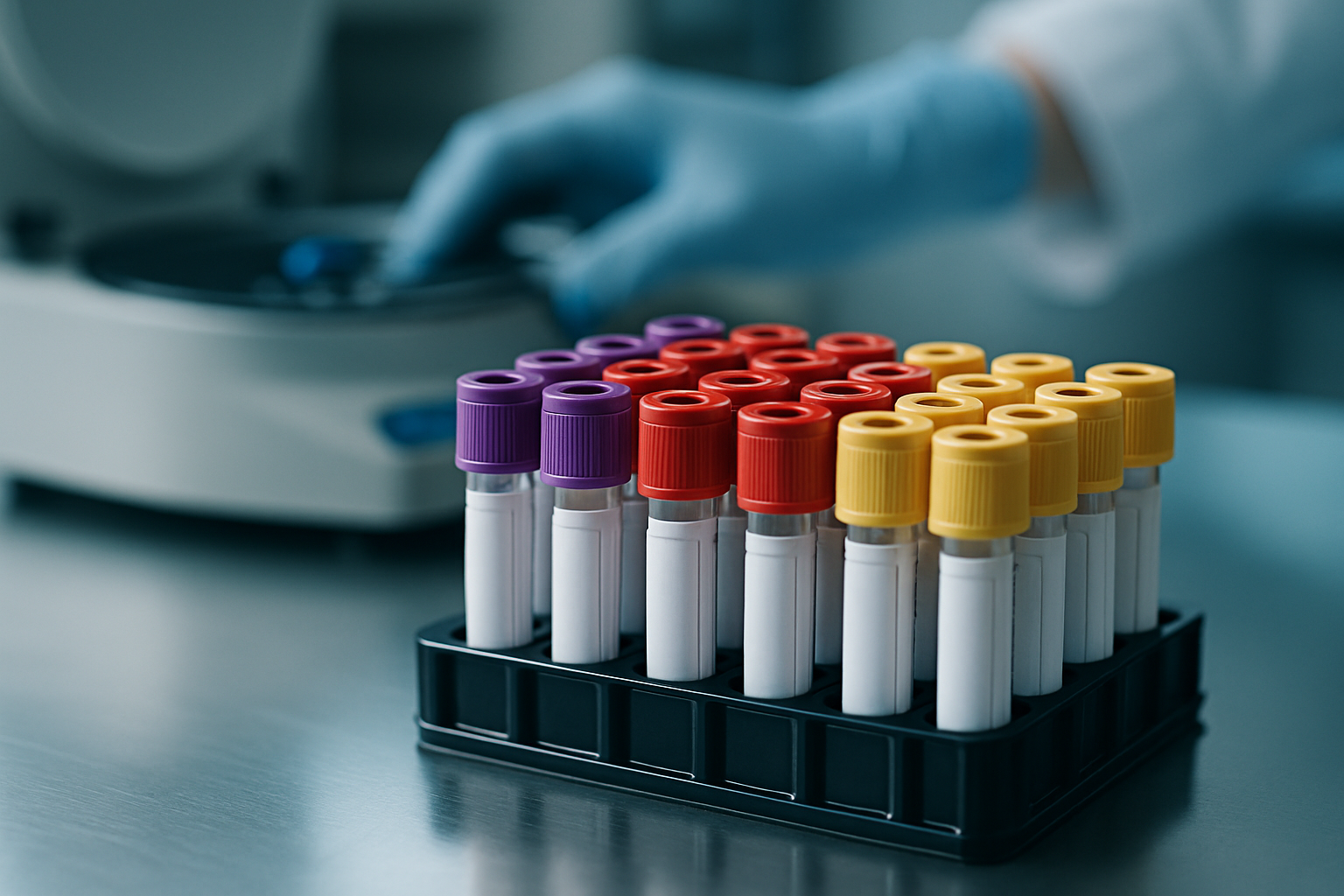
Your lab results came back “normal” — and you still feel terrible. You still have no libido. You still feel completely disconnected from your partner. There is a reason for that, and it isn't in your head.
The difference between a standard hormone panel and a functional hormone panel is the difference between knowing your tire isn't flat and knowing exactly how much air it needs. One tells you whether you've crossed an arbitrary threshold. The other tells you how your body is actually performing — and where it's quietly failing you.
Most gynecologists order three hormones. Most urologists order one. Functional medicine practitioners order dozens — and that gap is exactly why so many couples over 45 don't get real answers. This article is going to close that gap for you.
This is article 5 in the series companion to Biochemical Divorce, a book about what happens when two people love each other but their biochemistry is pulling them apart. If you haven't read the overview yet, start with the biochemical divorce overview before diving into today's testing deep-dive.
Why Standard Blood Work Leaves Couples Without Real Answers
Conventional medicine was built around identifying disease, not optimizing function. A standard hormone panel is designed to rule out pathology — it will catch menopause in its most extreme form, it will catch severe hypogonadism, it will flag a thyroid tumor. What it will not catch is the slow, subtle unraveling that happens to most couples in their late forties and fifties.
The reference ranges your doctor uses were built from population averages. That means you can be in the bottom 10% of “normal” and your result still reads as acceptable. But being in the bottom 10% of testosterone, or progesterone, or free T3 — that is not the same as being well. That is the land where libido disappears, where sleep fractures, where irritability becomes a permanent feature of your personality.
The Journal of Clinical Endocrinology & Metabolism (2018) published data showing that up to 40% of symptomatic patients with clear hormonal complaints fall within standard reference ranges. Their labs are “normal.” Their lives are not.
Couples come to me after visiting two, three, sometimes five different specialists. Each one found nothing wrong. And yet they sit across from me — exhausted, disconnected, increasingly convinced that the problem is emotional rather than biological. In almost every case, the problem is both. But the biological piece is real, measurable, and treatable. It simply wasn't tested properly.
The Difference Between Conventional and Functional Hormone Testing — It's Not Just Semantics
Conventional testing asks: “Are you sick?” Functional testing asks: “Are you thriving?” These are fundamentally different questions, and they require fundamentally different tests.
Here's what that looks like in practice. A conventional estrogen test measures total estradiol at a single point in time. A functional approach measures estradiol at multiple points across the menstrual cycle — or across a day — and also measures estrogen metabolites to understand how the body is breaking estrogen down. Are you producing protective metabolites or inflammatory ones? A single number cannot tell you that.
Functional testing also uses different sample types. Serum (blood) testing captures a snapshot. But hormones fluctuate throughout the day. Saliva and urine testing — particularly 24-hour urine collection or the newer dried urine testing for comprehensive hormones (DUTCH test) — capture the full rhythm of your endocrine system, not just one moment of it.
The other critical difference is scope. Functional practitioners look at the entire hormonal axis — the HPA axis (stress), the HPG axis (sex hormones), thyroid, metabolic markers, and nutrient cofactors — as an interconnected system. Pull on one thread and the whole weave shifts. That systemic view is what conventional labs miss entirely.
The Complete Female Hormone Panel: What to Test, When, and Why the Timing Matters

For a woman in perimenopause or early menopause, a complete functional hormone panel is not a simple checklist. It is a timed, multi-marker investigation that tells a story. The story of how her body is producing, metabolizing, and responding to hormones — and where the story is going wrong.
Core Female Hormones to Test
- Estradiol (E2) — tested on day 3 and day 21 of the cycle, or twice-monthly in perimenopausal women
- Estriol (E3) and Estrone (E1) — the three estrogens must be viewed together; estrone dominance post-menopause carries specific risks
- Progesterone — tested on day 21; low progesterone is one of the most underdiagnosed causes of anxiety, poor sleep, and low libido in women over 40
- Free and total testosterone — yes, women need testosterone too, and most gynecologists never test it
- DHEA-S — the precursor to both estrogen and testosterone; often low in fatigued women and rarely tested
- FSH and LH — pituitary signals that tell you where a woman is in her hormonal transition
- SHBG (Sex Hormone Binding Globulin) — because it determines how much hormone is actually available to your cells
- Estrogen metabolites via DUTCH test — specifically the 2-OH, 4-OH, and 16-OH pathways, which determine cancer risk and mood stability
Timing is not optional. Testing progesterone on day 5 of the cycle — as some labs do — tells you almost nothing. The luteal phase (days 19-22) is when progesterone peaks, and that is the only window where a low result is clinically meaningful. ACOG (American College of Obstetricians and Gynecologists) guidelines acknowledge this, yet many practitioners still test at the wrong time and then conclude everything is fine.
This conversation about menopause and andropause together becomes especially important when both partners are being tested simultaneously — because their hormonal declines interact in ways that amplify disconnection.
The Complete Male Hormone Panel: Total Testosterone Is Only the Beginning
Most urologists run one test: total testosterone. If it's above the cutoff — often set at 300 ng/dL — they tell you you're fine. But total testosterone is, at best, a starting point. It tells you nothing about what your body can actually use.
Core Male Hormones to Test
- Total testosterone — baseline only; must be collected before 10 a.m. when levels are highest
- Free testosterone — the fraction not bound to SHBG or albumin; a man can have total testosterone of 600 and still have functionally low free testosterone
- SHBG — elevated SHBG (common with age, insulin resistance, and hypothyroidism) dramatically reduces bioavailable testosterone
- Estradiol (E2) — men convert testosterone to estrogen via the aromatase enzyme; high estradiol in men causes gynecomastia, low libido, and emotional volatility
- LH and FSH — distinguishes primary (testicular) from secondary (pituitary) hypogonadism
- Prolactin — elevated prolactin suppresses testosterone and can indicate a pituitary issue that goes undetected for years
- DHEA-S — adrenal androgen precursor; declines 2-3% annually after age 30 and is strongly linked to vitality and drive
- PSA — not directly hormonal, but necessary baseline before any testosterone optimization discussion
Massachusetts Male Aging Study (Harvard, ongoing since 1987) documented that free testosterone declines approximately 1.2% per year after age 40, independent of total testosterone changes. A man at 55 with a “normal” total testosterone may have lost 18% of his bioavailable hormone over 15 years. That loss is clinically significant. It simply wasn't captured by standard testing.
The Thyroid Story Nobody Tells You: Why TSH Alone Is Not Enough
Thyroid dysfunction is one of the most common and most missed drivers of hormonal imbalance in couples over 45. It mimics everything — depression, weight gain, low libido, cognitive fog, cold intolerance, fatigue that no amount of sleep fixes. And it is routinely dismissed because TSH falls within the standard range.
Here is the problem with TSH as your sole thyroid marker. TSH measures what the pituitary is asking for — not what the thyroid is actually delivering, and not what your cells are actually using. A person can have optimal TSH and still be profoundly hypothyroid at the cellular level.
The Full Thyroid Panel
- TSH — still useful, but functional optimal range is 1.0–2.0 mIU/L, not the standard 0.5–4.5
- Free T4 — the storage form of thyroid hormone
- Free T3 — the active form that enters your cells; this is what determines how you actually feel
- Reverse T3 (rT3) — a competitive inhibitor; elevated in chronic stress, telling you your body is throttling thyroid function as a survival response
- TPO antibodies and thyroglobulin antibodies — markers of Hashimoto's thyroiditis, the autoimmune thyroid disease that affects up to 10% of women and is almost never tested in initial workups
The Lancet (2019) published a comprehensive review noting that subclinical hypothyroidism — defined by functional rather than conventional thresholds — was associated with a 68% increased risk of depressive symptoms and significant impairment in sexual function in both men and women. These patients would have been told their thyroid was “normal” by standard criteria.
Cortisol Mapping With a 4-Point Salivary Panel: What Your Cortisol Rhythm Reveals About Your Marriage
Cortisol is not just a stress hormone. It is the master regulator of your entire endocrine system. When cortisol is chronically dysregulated — too high, too low, or inverted — everything else follows: testosterone drops, progesterone is stolen to make more cortisol (a process called pregnenolone steal), thyroid conversion is suppressed, and libido becomes biologically impossible.
A single serum cortisol drawn at 8 a.m. tells you almost nothing useful. Cortisol follows a diurnal rhythm — it should peak sharply in the morning (the cortisol awakening response), decline through the day, and reach its nadir at night. If that rhythm is disrupted, the consequences are profound.
A 4-point salivary cortisol panel collects samples at waking, mid-morning, afternoon, and evening. It maps the entire arc of your cortisol curve. What I see most often in my practice is the "flat liner" — someone with low cortisol all day who is exhausted despite sleeping 9 hours — and the "evening surger" — someone whose cortisol spikes at 10 p.m., destroying sleep quality and making them simultaneously wired and emotionally reactive when their partner most wants to connect.
The connection between high cortisol and sex life deterioration is one of the most consistent findings in my 16 years of practice. Chronically elevated cortisol is biologically incompatible with sexual desire. The brain does not pursue pleasure when it perceives danger. High cortisol is the physiological signal of perceived danger, even when the danger is nothing more than a packed schedule and a phone that never stops buzzing.
Psychoneuroendocrinology (Stanford, 2020) demonstrated that couples where both partners showed flattened cortisol curves reported significantly lower relationship satisfaction and sexual frequency compared to couples with intact diurnal rhythms — independent of relationship length or stated stress levels.
Insulin, Blood Sugar, and SHBG: The Metabolic Factors That Sabotage Hormone Balance
Metabolic health and hormonal health are not separate conversations. They are the same conversation. Insulin resistance — which affects an estimated 88% of American adults to some degree, according to University of North Carolina research (2019) — directly disrupts every major hormonal axis.
Here is the chain of events. Elevated insulin suppresses SHBG production in the liver. Lower SHBG initially sounds like good news — it means more free testosterone. But low SHBG also means testosterone is cleared from the blood more rapidly. And in women, low SHBG combined with even slightly elevated androgens drives the hormonal profile associated with polycystic ovary syndrome (PCOS), even in perimenopausal women who have never had a PCOS diagnosis.
In men, insulin resistance drives aromatase activity — the enzyme that converts testosterone into estrogen. So the man who is metabolically insulin-resistant is simultaneously lowering his testosterone and raising his estrogen. His labs may show a total testosterone within range. What they won't show, without additional testing, is that his estradiol is elevated and his free testosterone is functionally depleted.
Metabolic Tests Every Couple Over 45 Should Have
- Fasting insulin — not just fasting glucose; insulin rises years before blood sugar does
- HbA1c — 90-day average blood sugar, a far better predictor than a single fasting glucose
- HOMA-IR — calculated from fasting insulin and fasting glucose; the clinical gold standard for insulin resistance
- SHBG — a sensitive metabolic and hormonal indicator; low SHBG is an early warning sign of insulin resistance
- Triglycerides and HDL ratio — a proxy for metabolic dysfunction and one of the most underutilized screening tools in clinical practice
Nutrient Deficiencies That Masquerade as Hormonal Problems in Couples Over 45
Here is something most people don't expect to hear from their doctor: sometimes what looks like a hormonal problem is actually a nutrient deficiency problem. Hormones require specific micronutrients to be synthesized, transported, converted, and received by cells. When those nutrients are low, the hormonal system stalls — regardless of what your hormone levels look like on paper.
Vitamin D is the most dramatic example. It is technically a hormone precursor, not a vitamin. Every cell in the body has vitamin D receptors, including the cells that produce sex hormones. The Endocrine Society (2018) found that men with vitamin D levels below 20 ng/mL had significantly lower total and free testosterone compared to those above 30 ng/mL. Yet vitamin D is rarely included in a standard hormonal workup.
Nutrient Markers That Must Be Tested
- Vitamin D (25-OH) — functional optimal is 50–80 ng/mL, not the 20 ng/mL threshold used in conventional medicine
- Magnesium (RBC, not serum) — serum magnesium is stable until you are critically deficient; RBC magnesium reflects true intracellular status
- Zinc — essential for testosterone production, sperm quality, and immune function; depleted by stress, alcohol, and poor diet
- B12 and folate — critical for methylation, which governs estrogen detoxification and neurotransmitter production
- Ferritin — iron storage; low ferritin is one of the most common causes of fatigue and hair loss in women and is frequently dismissed as "within range"
- Omega-3 index — measures the ratio of anti-inflammatory to pro-inflammatory fatty acids; low omega-3 is associated with elevated cortisol and impaired hormonal signaling
I have had patients spend three years in couples therapy addressing a "communication problem" that turned out to have a significant nutritional component. When we corrected a severe magnesium and B12 deficiency, the anxiety, irritability, and emotional reactivity that were destroying the relationship diminished markedly within 60 days. The relationship work still mattered. But the biochemistry had to be addressed first.
This is precisely what I describe in the section on 27 signs of biochemical divorce — the subtle, cumulative ways that nutritional and hormonal depletion reshapes the emotional texture of a relationship until partners feel like strangers.
How to Talk to Your Doctor About Ordering Functional Tests — Without Being Dismissed
This is where many patients feel stuck. They read the research, they know what they need tested, and then they sit in their doctor's office and are told "that's not medically necessary" or "your insurance won't cover that." Here is how to navigate that conversation with more success.
First, come prepared with specific symptom documentation. Vague complaints are easy to dismiss. A written log showing that you have had interrupted sleep 5 out of 7 nights for the past 6 months, that your libido has been absent for 18 months, and that your energy has declined progressively is much harder to dismiss. It transforms the conversation from subjective ("I don't feel well") to objective ("here is a documented pattern").
Second, request specific tests by name. Don't ask your doctor to "check your hormones." Ask for free testosterone, progesterone on day 21, a full thyroid panel including free T3 and TPO antibodies, fasting insulin, and 25-OH vitamin D. A specific request is far more actionable than a general one — and it signals to your doctor that you have done your research.
Third, know that you can order many of these tests directly, without a physician's order, through services like Ulta Lab Tests or Walk-In Lab. The results will be yours to bring to any practitioner. This is not ideal — interpretation matters enormously — but it is better than going without data for another year.
The book
📖 Acessar o livro na Amazon
Deixe seu nome e email — você recebe um bônus exclusivo + acesso direto ao livro.
Building Your Couple's Hormonal Baseline: A Testing Roadmap for the Next 90 Days
One of the most powerful things a couple can do is get tested together. Not because your results will be identical, but because seeing the data side by side creates shared understanding. It shifts the narrative from "you've changed" to "our biochemistry has shifted, and here is the evidence." That reframe is clinically and emotionally transformative.
Here is a simplified 90-day testing roadmap that I use with couples in my practice who are beginning this process for the first time.
Month 1: Establish the Baseline
- Both partners complete full sex hormone panels (appropriately timed for women)
- Full thyroid panel for both
- Metabolic panel: fasting insulin, HbA1c, HOMA-IR, triglycerides, HDL
- Core nutrients: vitamin D, magnesium (RBC), zinc, ferritin, B12, folate
Month 2: Cortisol and Adrenal Mapping
- 4-point salivary cortisol for both partners
- DHEA-S for both
- DUTCH test for the female partner if estrogen metabolite data is needed
Month 3: Review, Interpret, and Begin the Protocol
- Review all results with a functional medicine practitioner
- Identify priority interventions: lifestyle, nutrition, supplementation, hormone replacement for couples if indicated
- Begin tracking symptoms with a couples health journal — subjective improvement is data too
- Plan a 90-day retest to measure response to any interventions
The CB5 method 90-day protocol that I developed specifically for couples in midlife is built entirely around this testing-first approach. You don't start the protocol until you have the data. That is what separates precision medicine from guessing.
Getting your hormonal baseline is not about finding what's broken. It is about understanding where you both are, right now — so that the next steps you take are grounded in your actual biology rather than in generic advice that may not apply to either of you.
Read next: The CB5 Method — a 90-day protocol built around your actual lab results, or start with the book on
📖 Acessar o livro na Amazon
Deixe seu nome e email — você recebe um bônus exclusivo + acesso direto ao livro.
Frequently Asked Questions
What's the difference between a functional hormone test and a standard hormone test?
A standard hormone test is designed to identify disease — it checks whether you've crossed a threshold that indicates serious pathology. A functional hormone test is designed to assess optimization — it examines not just levels but timing, metabolites, binding proteins, and the relationship between multiple hormonal systems. Standard panels might test three markers. A functional panel might test thirty. The difference is between screening for crisis and understanding how your system is actually performing. For couples experiencing libido loss, mood changes, and disconnection, the functional approach is the one that actually reveals what's driving those symptoms.
How much do functional hormone tests typically cost, and are they covered by insurance?
Costs vary significantly depending on which tests you choose and how you order them. A comprehensive functional panel — including sex hormones, thyroid, adrenal, metabolic markers, and key nutrients — might run $300 to $800 out of pocket if ordered through a direct-to-consumer lab. Through a functional medicine practitioner using specialty labs, the same panel could cost $500 to $1,500. Insurance coverage is inconsistent: standard labs (TSH, basic estradiol, total testosterone) are often covered; specialty tests like DUTCH, 4-point salivary cortisol, and RBC magnesium usually are not. Many patients find the investment worthwhile given how long they've gone without real answers.
Can I order these functional tests myself without a doctor's order?
Yes, in most U.S. states you can order many of these tests directly through services like Ulta Lab Tests, Walk-In Lab, or Request A Test. The DUTCH test is also available for direct order through Precision Analytical. You do not always need a physician's order. What you do need, however, is knowledgeable interpretation. A result without context can be misleading or anxiety-provoking. I strongly recommend ordering these tests in the context of working with a functional medicine practitioner who can translate the numbers into a meaningful clinical picture — but having data is better than having none while you find the right practitioner.
What are the most important hormones to test for a woman in perimenopause?
For a perimenopausal woman, the highest-yield starting panel includes estradiol and progesterone (both timed correctly to the menstrual cycle), free and total testosterone, DHEA-S, FSH, SHBG, and a full thyroid panel including free T3 and TPO antibodies. Adding a 4-point salivary cortisol is particularly valuable because adrenal dysfunction is extremely common in this transition and often amplifies every other hormonal imbalance. If budget permits, the DUTCH test adds critical information about estrogen metabolism — specifically which breakdown pathways your body favors — which has direct implications for both symptom management and long-term health risk.
What should a man over 45 have tested beyond total testosterone?
Beyond total testosterone, a man over 45 should have free testosterone, SHBG, estradiol (E2), LH, FSH, prolactin, and DHEA-S tested. Fasting insulin and HOMA-IR are also essential because insulin resistance is the most common driver of elevated estradiol and suppressed free testosterone in middle-aged men — yet it is almost never checked in a urology workup. A full thyroid panel and key nutrients (vitamin D, zinc, magnesium, ferritin) round out the picture. Together, these markers give you a complete view of why a man might feel depleted, emotionally flat, and sexually disinterested even when total testosterone looks "acceptable."
Why do doctors say everything is normal when patients clearly feel something is wrong?
The answer is fundamentally a reference range problem. Conventional reference ranges are built from population averages — including sick, sedentary, and nutritionally deficient populations. Being "within range" means you're not an outlier. It does not mean you're functioning optimally. A person in the bottom 15% of progesterone, free testosterone, or free T3 is technically "normal" by this standard — and yet may be experiencing profound symptoms. Additionally, most standard panels simply don't test the markers that would reveal the problem. When you only look in certain places, you only find certain things.
Is saliva testing for cortisol actually accurate and reliable?
Yes. Salivary cortisol testing is well-validated in the peer-reviewed literature and is considered superior to single serum draws for assessing the diurnal cortisol rhythm. Saliva captures free (unbound) cortisol — the biologically active fraction — whereas serum measures both bound and unbound cortisol. The 4-point collection protocol is the most clinically useful because it maps the full arc of the cortisol curve across the day. Labs such as ZRT Laboratory and Diagnostechs specialize in this testing and have strong quality control. The caveats: sample collection timing must be precise, and certain foods, supplements, and activities can temporarily affect results.
What is SHBG and why does it matter for libido and hormone balance?
SHBG — Sex Hormone Binding Globulin — is a protein produced by the liver that binds to sex hormones, primarily testosterone and estradiol, and carries them through the bloodstream. The key point is that hormone bound to SHBG is not available to your cells. Only the "free" fraction — unbound — can enter tissues and exert its effects. If SHBG is very high (common with hyperthyroidism, liver issues, and certain medications), your total testosterone might look fine while your free testosterone is critically low. If SHBG is very low (common with insulin resistance and obesity), it creates a different set of imbalances. Testing SHBG alongside total hormone levels is essential for understanding what your tissues are actually receiving.
How often should couples in midlife retest their hormones?
For couples establishing a baseline for the first time, I recommend a comprehensive panel followed by a targeted retest at 90 days to assess response to any interventions. After that, annual retesting is appropriate for most people in stable good health. If you are actively managing a hormonal condition — using hormone therapy, addressing adrenal dysfunction, or working through significant metabolic changes — retesting every 3 to 6 months is more appropriate. Timing adjustments to supplementation or hormone therapy should always be followed by a retest before further changes are made. The goal is to use data to drive decisions, not intuition alone.
What do I do with my results if my doctor doesn't know how to interpret functional labs?
This is more common than it should be, and it's not a reason to give up. Start by seeking a functional medicine practitioner — you can search through the Institute for Functional Medicine's provider directory (ifm.org). Integrative physicians, naturopathic doctors (in licensed states), and some forward-thinking internists also have experience with these panels. Telehealth has made access to functional medicine significantly easier — you no longer need to find someone in your city. As a starting point, the free bonus materials available at this link include a functional reference range guide that will help you begin reading your own results with more clinical context while you find the right practitioner.