
Navegue pelo conteúdo
- When the Person You Married Feels Like a Stranger — And You Don't Know Why
- What Is a Biochemical Divorce? The Science Behind the Emotional Distance
- How Menopause Rewires a Woman's Brain, Body, and Desire
- How Andropause Quietly Erodes a Man's Drive, Patience, and Presence
- The Collision Point: What Happens When Both Hormonal Storms Hit at the Same Time
- Why Couples Therapists Miss This — and What Functional Medicine Sees Instead
- The Four Biochemical Triggers That Turn Love Into Resentment
- Your Nervous System Is Not Your Enemy — It's Just Unregulated
- What Couples Who Stay Together During This Window Do Differently
- The First Step Toward Biochemical Reconnection Starts With Understanding, Not Willpower
- Frequently Asked Questions
Biochemical Divorce: When Menopause and Andropause Start Tearing Your Marriage Apart

She stopped reaching for his hand somewhere around year twenty-three — and neither of them could explain exactly when, or why.
The divorce papers weren't filed over an affair or a fight. They were filed after two people spent three years feeling completely alone in the same bed.
Most couples who split in their late forties and fifties don't fail because they stopped loving each other. They fail because their hormones stopped cooperating.
I have been practicing functional integrative medicine for sixteen years. I have seen over 28,000 patients walk through my door — many of them couples who arrived believing they had a communication problem, a compatibility problem, or simply a problem with each other.
In the majority of those cases, the real problem was happening inside their cells, not inside their marriage.
This article is the first in a seven-part series accompanying my book Biochemical Divorce. What you're about to read could reframe everything you think you know about the marriage crisis menopause and andropause create — and why understanding the biology first changes everything.
When the Person You Married Feels Like a Stranger — And You Don't Know Why
There is a particular kind of loneliness that happens inside a long marriage. It isn't dramatic. There's no single breaking point you can point to. It's a slow, creeping distance — like two people drifting on the same raft, but somehow ending up on opposite ends.
You still share a home. You still eat dinner together. You may still say “I love you.” But something has gone quiet between you — something that used to be alive.
The most painful part is that you can't explain it to a therapist, because you can't explain it to yourself. It doesn't feel like a choice. It feels like erosion.
What I've observed across thousands of patients is that this experience almost always coincides with a very specific biological window: the convergence of perimenopause or menopause in women, and andropause in men. Both happening simultaneously. Both going completely unrecognized.
When two people are simultaneously undergoing profound neurochemical reorganization — and neither knows it — the results can look and feel exactly like the end of a marriage.
What Is a Biochemical Divorce? The Science Behind the Emotional Distance
A biochemical divorce is not a legal event. It's a relational state — one in which two people are still technically married but have become emotionally, physically, and neurologically disconnected, primarily due to hormonal changes rather than character flaws or relational failures.
The term comes from a clinical pattern I've documented repeatedly: couples arriving at the threshold of separation whose primary complaint — emotional distance, loss of desire, irritability, feeling unseen — maps almost perfectly onto the hormonal profiles I see in their lab work.
Here's what the science tells us. Estrogen, progesterone, testosterone, cortisol, oxytocin, and DHEA are not just reproductive hormones. They are social hormones. They govern how you perceive threat, how you respond to intimacy, how much patience you have, how much empathy you can access, and how strongly you bond with the person next to you.
A study from Harvard Medical School (2018) showed that estrogen directly modulates activity in the prefrontal cortex — the region responsible for emotional regulation and empathy. When estrogen drops, so does the biological capacity for calm connection.
Meanwhile, research published in The Journal of Clinical Endocrinology & Metabolism (2020) confirmed that low testosterone in men significantly reduces motivation, emotional availability, and tolerance for stress — the exact traits that hold a marriage together under pressure.
When both are happening at the same time, inside the same household, you don't just get two suffering individuals. You get a relational system that is biochemically primed for conflict, withdrawal, and disconnection.
That is what I call a biochemical divorce — and it can be reversed, when it is recognized for what it actually is.
How Menopause Rewires a Woman's Brain, Body, and Desire
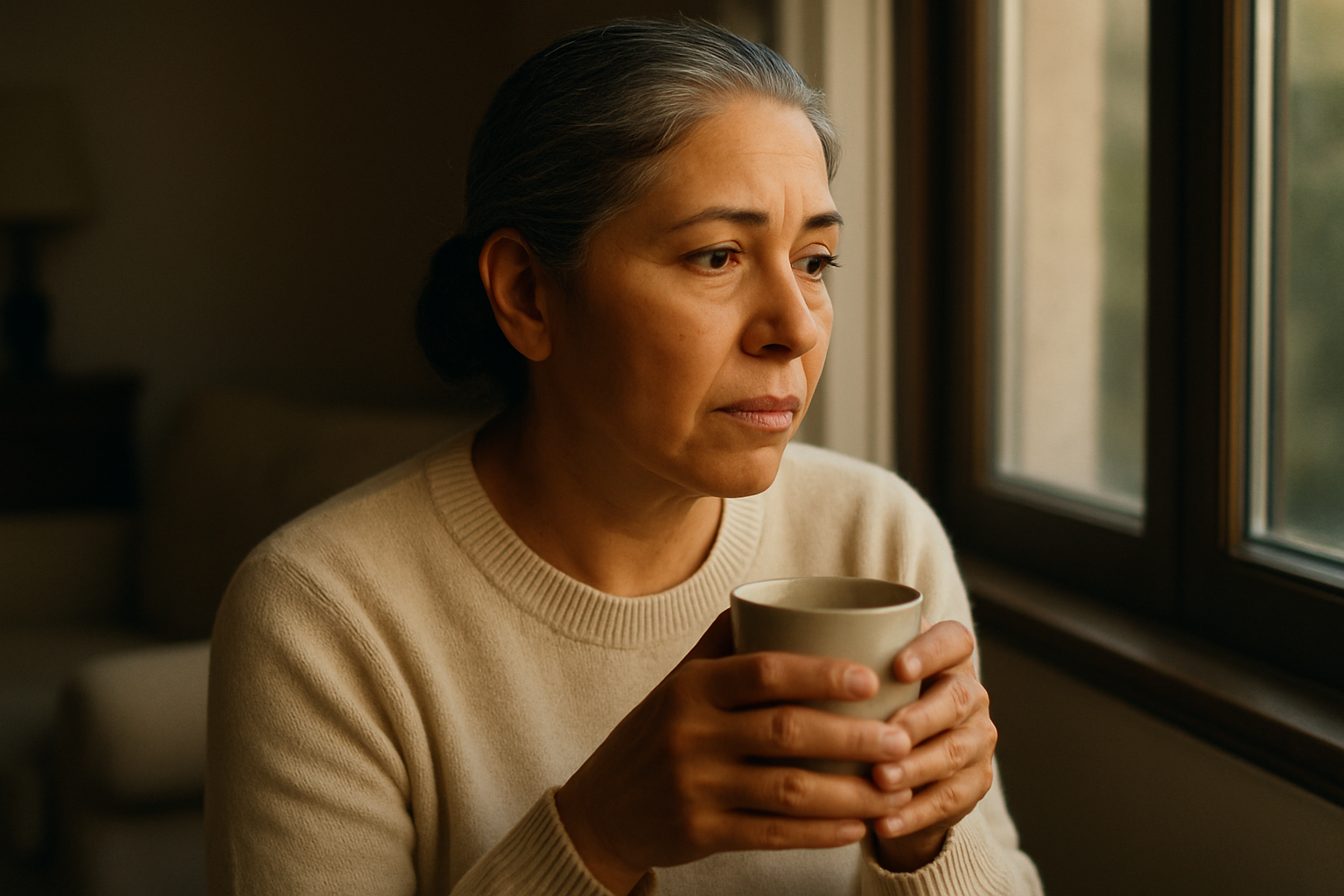
Most people think of menopause as a reproductive transition. But neurologically, it is a full-scale brain renovation project — and one that nobody warned most women about.
Estrogen receptors exist throughout the brain — in the hippocampus, the amygdala, the hypothalamus, and the prefrontal cortex. When estrogen levels begin to decline during perimenopause, typically starting in a woman's mid-to-late forties, those receptor sites go quiet. And the effects cascade across every system they govern.
Sleep deteriorates. Cognitive sharpness blurs. Anxiety rises without a clear external cause. Irritability appears in situations that used to feel manageable. The threshold for feeling overwhelmed drops significantly.
Progesterone — which functions as a natural anxiolytic by binding to GABA receptors in the brain — also declines. This means that the woman who once felt emotionally steady may now find herself reactive, tearful, or inexplicably tense. Not because she is weak. Because her neurochemistry has shifted.
Testosterone, often forgotten in women's health conversations, also drops during this transition. And testosterone in women is not just about libido — it governs motivation, assertiveness, confidence, and the ability to feel physically present in one's own body.
A landmark study from the University of Melbourne (2019) tracked women across the menopausal transition and found significant correlations between declining estrogen and testosterone levels and reported declines in relationship satisfaction — independent of any external stressors.
What does this look like in a marriage? The woman who was once warm and communicative becomes quieter. Touch starts to feel like an intrusion rather than a comfort. The idea of sex shifts from pleasurable to exhausting. She still loves her husband — but her nervous system has stopped responding the way it used to. And neither of them understands why.
How Andropause Quietly Erodes a Man's Drive, Patience, and Presence
Men don't have a menopause. But they have something that is equally disruptive and far less discussed: andropause, or late-onset hypogonadism — a gradual, steady decline in testosterone that begins around age 35 and accelerates after 50.
Unlike menopause, andropause doesn't announce itself with a clear biological event like the cessation of menstruation. It arrives quietly. Slowly. A man notices he's more tired than he used to be. His gym sessions feel harder. He's less interested in initiating sex. He snaps more easily at small things. He withdraws.
Most men in their late forties and fifties attribute these changes to stress, aging, or “just getting older.” In my clinical experience, the majority don't seek evaluation — because admitting something is wrong hormonally feels, to many men, like admitting a fundamental failure of masculinity.
But the data is unambiguous. Research published in The Lancet Diabetes & Endocrinology (2021) showed that testosterone deficiency in middle-aged men is associated with increased rates of depression, irritability, reduced empathy, and decreased relational engagement. These are not personality traits. These are symptoms.
Testosterone governs far more than sexual function. It regulates dopamine production — which means low testosterone directly reduces a man's ability to feel motivation, pleasure, and enthusiasm. It also modulates cortisol sensitivity, meaning men with declining testosterone tend to experience stress as more overwhelming, more persistent, and harder to shake.
In a marriage, this looks like a husband who has become emotionally inaccessible. He isn't cruel. He isn't checked out by choice. He is, quite literally, running on a depleted neurochemical system that no longer supports the emotional bandwidth that intimacy requires.
His wife interprets this withdrawal as rejection. He interprets her emotional escalation as pressure he can't handle. Both are right about what they're experiencing. Both are wrong about the cause.
The Collision Point: What Happens When Both Hormonal Storms Hit at the Same Time
Here is what makes this window — roughly ages 45 to 58 — so particularly dangerous for long-term relationships. Both partners are undergoing neurochemical reorganization simultaneously. And the symptoms of each partner's transition make the other's worse.
A woman in perimenopause has a lowered threshold for stress reactivity. She needs more emotional attunement from her partner — not less. She needs more communication, more presence, more patience.
A man in andropause has a reduced capacity to provide exactly that. His emotional bandwidth has narrowed. His patience is thinner. His instinct under pressure is to retreat, not to engage.
The result is a loop that reinforces itself. She reaches for connection; he withdraws. His withdrawal triggers her anxiety; her anxiety triggers his defensiveness. Neither is being malicious. Both are responding to a biology they don't understand. And the marriage absorbs the damage.
A 2022 analysis from Stanford Center for Longevity examining divorce patterns found that the 45–55 age bracket shows a disproportionate spike in “gray divorces” — separations in long-term marriages — with emotional disconnection and loss of intimacy cited as primary drivers in over 70% of cases. Hormonal evaluation was absent from the clinical history in virtually all of them.
This is the collision point. And it can look so much like a failed marriage that most couples — and most clinicians — never look for the biochemical signature underneath it. To understand this dynamic more fully, read about menopause and andropause at the same time and what it really does to a couple's nervous system.
Why Couples Therapists Miss This — and What Functional Medicine Sees Instead
I have enormous respect for couples therapists. The relational work they do is real, valuable, and necessary. But there is a fundamental blind spot in most therapeutic frameworks when it comes to midlife couples: the assumption that emotional experience is generated by psychology alone.
When a woman reports feeling irritable, emotionally distant, and uninterested in physical intimacy, most therapy frameworks route that into attachment patterns, childhood wounds, or communication dynamics. These may be real contributing factors. But if no one measures her estradiol, progesterone, testosterone, cortisol, and thyroid function, you are working with an incomplete map.
When a man reports feeling emotionally flat, sexually disinterested, and easily overwhelmed by his wife's emotional needs, most frameworks explore avoidant attachment or emotional immaturity. Again — possibly relevant. But if his free testosterone is at the bottom of the reference range and his cortisol is dysregulated, no amount of communication exercises will restore the neurochemical foundation he's lost.
Functional medicine asks a different set of questions first. Before we explore the story, we look at the biology. We run functional hormonal tests for couples that include not just standard panels, but full hormonal cascades — DHEA-S, free testosterone, estradiol, progesterone, cortisol rhythm, thyroid panel, and inflammatory markers.
What we consistently find surprises couples. The person they thought was becoming cold, distant, or difficult is actually suffering — from a hormonal deficit that has altered their emotional architecture. That realization alone changes the relational dynamic. Blame gives way to understanding. And understanding is where healing begins.

The Four Biochemical Triggers That Turn Love Into Resentment
Across my clinical work, I've identified four recurring biochemical mechanisms that most consistently transform functional marriages into disconnected ones during this hormonal window. Understanding them changes how you interpret what's happening between you.
1. Oxytocin Suppression
Oxytocin is your bonding hormone. It is released through touch, eye contact, shared laughter, and physical intimacy. Estrogen potentiates oxytocin signaling — meaning as estrogen falls, the neurochemical reward for physical closeness diminishes. Touch stops feeling like safety and starts feeling like obligation or even intrusion.
2. Cortisol Dysregulation
Chronic stress and libido after 50 are deeply intertwined. When cortisol remains chronically elevated — which happens in both men and women under hormonal flux — the body's stress response system stays activated. In this state, your brain categorizes the people around you as potential threats rather than sources of comfort. Your partner's needs register as demands. Their presence triggers alertness rather than relaxation.
3. Dopamine Depletion
Testosterone drives dopamine production. When testosterone declines in both men and women, the brain's reward system becomes less responsive. Activities that once brought pleasure — including intimacy with a partner — generate less dopamine, and therefore less motivation to pursue them. This isn't indifference. It's a neurochemical bottleneck.
4. Amygdala Hypersensitivity
Estrogen helps regulate the amygdala — the brain's threat-detection center. As estrogen declines, the amygdala becomes less regulated and more reactive. Small conflicts escalate more easily. Perceived criticism lands harder. The emotional bruising that results from routine marital friction becomes more severe and slower to resolve. A neutral tone of voice can read as hostility. A closed door can feel like abandonment.
These four triggers, operating simultaneously in two people living together, create a relational environment that is biochemically hostile to love — regardless of the genuine affection that still exists between them. You can use the biochemical divorce checklist for couples to identify how many of these patterns are currently active in your relationship.
Your Nervous System Is Not Your Enemy — It's Just Unregulated
One of the most important reframes I offer patients is this: the reactions you are having — the irritability, the withdrawal, the emotional flooding, the numbness — are not character defects. They are the output of an unregulated nervous system responding to a profoundly disrupted hormonal environment.
The autonomic nervous system operates on two primary channels: the sympathetic (fight-or-flight) and the parasympathetic (rest-and-connect). Healthy intimacy, emotional attunement, and sexual connection all require parasympathetic dominance. You cannot bond while your nervous system believes you are under threat.
Hormonal dysregulation during menopause and andropause chronically tilts the nervous system toward sympathetic activation. This means that even in a safe home environment, with a genuinely loving partner, both individuals may be operating in a low-grade threat state — unable to access the physiological conditions that make intimacy feel good.
Research from the Polyvagal Institute (2021) on neuroception — the body's unconscious assessment of safety — confirms that hormonal states directly influence how we read our environment and the people in it. A person with dysregulated cortisol and low sex hormones will unconsciously perceive their intimate partner as a source of demand and danger rather than safety and comfort.
This is not a psychological problem. It is a physiological state. And physiological states respond to physiological interventions — targeted nutrition, hormone optimization, sleep architecture repair, stress regulation protocols, and when appropriate, hormone replacement for both partners.
What Couples Who Stay Together During This Window Do Differently
In my practice, I have also seen couples navigate this window and come out the other side closer, more intentional, and more physically connected than they had been in years. They are not exceptions because of luck or extraordinary willpower. They share a common set of behaviors that are worth naming.
First, they named the biology. They stopped attributing every symptom to the relationship and started asking: what is happening inside our bodies that is showing up between us? This cognitive shift from personal blame to physiological curiosity changes the entire emotional tone of the marriage.
Second, they sought evaluation together. Not just one partner going to an endocrinologist while the other stays home. Both. The CB5 method 90-day protocol I developed is designed specifically for couples — because the hormonal ecosystem of a marriage requires both partners to be part of the solution.
Third, they lowered the expectation that their relationship should feel the same way it did at 30. Midlife is a genuine biological transition. The goal is not to recreate early-relationship neurochemistry. The goal is to build a new intimacy architecture appropriate to where you actually are — which, when done well, is often deeper and more durable than what came before.
Fourth, they treated sleep as non-negotiable. Sleep disruption — which both menopause and andropause cause — is the single fastest route to hormonal chaos. A 2020 study from UC Berkeley's Sleep and Neuroimaging Laboratory showed that just two nights of poor sleep dramatically increases amygdala reactivity and reduces empathic accuracy — meaning sleep-deprived partners literally misread each other's emotional cues more often.
Fifth, they kept physical contact deliberate — not sexual necessarily, but present. Even brief, non-demand touch — a hand on a shoulder, sitting close on the couch — maintains oxytocin signaling enough to preserve the neurological sense of connection even when libido is temporarily diminished.
The First Step Toward Biochemical Reconnection Starts With Understanding, Not Willpower
If you have read this far and recognized yourself — or your marriage — in what I've described, I want you to hold on to one thing: this is not your fault. And it is not your partner's fault. It is a biological event that millions of couples are currently navigating with no framework, no language, and no map.
The marriage crisis that menopause and andropause create is real. The suffering is real. But the origin is biochemical — and biochemical origins respond to biochemical solutions.
Willpower will not override a dysregulated cortisol axis. Positive thinking will not compensate for depleted testosterone. Trying harder at communication will not rebuild an oxytocin system that has gone quiet due to estrogen withdrawal. These are not character challenges. They are physiological realities that require physiological interventions.
What works is this: getting the right information, running the right tests, and building a joint protocol that addresses both partners' hormonal ecosystems simultaneously. That is exactly what the full
📖 Acessar o livro na Amazon
Deixe seu nome e email — você recebe um bônus exclusivo + acesso direto ao livro.
Understanding is the first medicine. Not understanding what your partner did wrong — but understanding what your bodies are doing, together, in this specific season of life. That shift in perspective is not small. For many of the couples I've worked with, it has been the difference between the end of a marriage and the beginning of a much better one.
The biology is not the end of the story. It is, finally, a place to begin.
Read next: Menopause and Andropause at the Same Time — What Really Happens to a Couple, or get the complete protocol in the
📖 Acessar o livro na Amazon
Deixe seu nome e email — você recebe um bônus exclusivo + acesso direto ao livro.
Frequently Asked Questions
Is it normal to feel emotionally disconnected from my spouse during menopause?
Yes — and it is far more common than most women are told. Emotional disconnection during menopause is not a sign that your marriage has failed or that your feelings for your partner have changed at their core. The hormonal shifts of perimenopause and menopause directly alter the brain regions responsible for emotional attunement, empathy, and the neurochemical rewards of closeness. Estrogen withdrawal suppresses oxytocin signaling, progesterone loss removes a key calming influence on the nervous system, and declining testosterone reduces the motivation for intimacy. What you are experiencing is a physiological state — not a verdict on your relationship. The most important first step is recognizing that the disconnection has a biological driver that can be investigated and addressed.
Can hormonal changes actually cause a marriage to fall apart, or is that an exaggeration?
It is not an exaggeration — though it is rarely named directly in mainstream conversation. Hormones govern emotional regulation, stress tolerance, empathy, libido, patience, and the capacity for intimacy. When these systems are simultaneously disrupted in both partners during midlife, the relational damage can accumulate faster than either person realizes. The 45–55 age bracket shows a statistically significant spike in long-term marriage dissolution, and research consistently implicates emotional disconnection and loss of physical intimacy as primary drivers — both of which have clear hormonal correlates. The hormones don't cause divorce directly. But they dismantle the neurological infrastructure that keeps couples emotionally close, and without that infrastructure, even genuinely loving relationships become vulnerable.
How do I know if our problems are biochemical versus truly relational?
This is one of the most important clinical questions — and the honest answer is that it is usually both, in different proportions. A useful indicator is timing: if the shift in your relationship coincided with the onset of menopausal or andropausal symptoms in either partner, that temporal correlation is significant and worth investigating medically. If the emotional distance, irritability, and withdrawal feel somewhat disconnected from specific events or patterns in the relationship — if you find yourself thinking "I don't know what changed" — that is often a signature of biochemical disruption. A functional hormonal panel for both partners, combined with an honest inventory of when symptoms began, can help distinguish between primary biological drivers and purely relational dynamics. In most cases I see clinically, addressing the biology dramatically improves the relational picture.
My husband seems irritable and withdrawn — could he be going through andropause?
It is entirely possible, especially if he is in his late forties or fifties. Andropause — the gradual age-related decline in testosterone — produces a symptom cluster that is frequently misattributed to personality, stress, or depression: persistent irritability, emotional flatness, reduced initiative, diminished libido, fatigue, and a general withdrawal from engagement. Men are less likely to seek evaluation for these symptoms than women are, partly because the cultural script around male aging doesn't make space for hormonal decline as a legitimate medical concern. If you notice that his changes feel different from his usual temperament — less like who he is and more like something that has happened to him — that distinction is clinically meaningful. Encouraging a conversation with a functional medicine practitioner and getting a full hormonal panel is a reasonable and potentially transformative first step.
At what age does biochemical divorce typically start affecting couples?
The most concentrated risk window is between approximately 44 and 58, which is when perimenopause and menopause overlap most significantly with accelerating testosterone decline in men. However, the groundwork is often laid earlier. Testosterone decline in men begins as early as the mid-thirties, and some women begin experiencing perimenopausal hormonal fluctuations in their early forties. Couples who are under significant chronic stress — which dysregulates the hormonal system earlier and more severely — may enter this window sooner. If your relationship has shifted noticeably in your mid-forties without a clear external trigger, hormonal evaluation is worth pursuing at any point in that range rather than waiting for symptoms to become severe.
Can couples recover from this hormonal disconnection without therapy?
Many couples make significant progress through hormonal optimization, lifestyle interventions, and the kind of shared biological understanding that reframes their experience of each other — without formal couples therapy. That said, I would never argue that therapy is unnecessary. When biochemical treatment restores the neurological capacity for emotional connection, many couples find that the old relational wounds — accumulated during years of hormonally-driven misattunement — still need attention. The ideal approach for most couples is parallel: address the biology and the relationship simultaneously, because each one creates a better environment for the other. A functional medicine evaluation is a powerful starting point because it reframes blame as biology, which changes the emotional climate of the relationship immediately.
What's the difference between a normal rough patch and a biochemical crisis in a marriage?
A normal rough patch typically has identifiable external drivers — financial stress, a loss in the family, a career transition, parenting demands — and tends to resolve or significantly improve when those stressors ease. A biochemical crisis is characterized by a sense of inexplicable disconnection: emotional distance and loss of intimacy that cannot be traced back to a specific event or pattern, that persists even during objectively low-stress periods, and that feels more like a physiological state than a relational grievance. A biochemical crisis also tends to coincide temporally with the onset of menopausal or andropausal symptoms in one or both partners. If you find yourself repeatedly thinking "we have nothing to fight about but we feel nothing either," that combination of pervasive flatness and the midlife timing is a strong indicator that hormonal factors are primary.
Does menopause always lower libido, or is that a myth?
It is not a myth — but it is not universal either. Libido is a complex construct driven by multiple hormonal and neurological factors, and the relationship between menopause and desire is more nuanced than popular understanding suggests. The decline in estrogen causes vaginal atrophy and reduced lubrication, which makes sex physically less comfortable and therefore less desired. The decline in testosterone — which is the primary libido-driving hormone in women, not just men — reduces spontaneous desire and the overall motivation for intimacy. However, some women report that menopause, once they are through the acute transition, brings a paradoxical freedom from the hormonal volatility of their reproductive years, and their desire for intimacy returns in a different but meaningful form. Hormonal optimization can significantly support libido — but so can addressing sleep, stress, relationship safety, and physical comfort during sex.
Should we see a couples therapist or a functional medicine doctor first?
My clinical recommendation is to start with a functional medicine evaluation — not because therapy is less valuable, but because arriving at therapy without understanding the biological context often means spending sessions working on communication strategies while the underlying hormonal disruption continues to fire. When both partners understand that a significant portion of what they are experiencing is physiologically driven, the emotional charge of relational conflict often decreases substantially — and that reduced charge creates a much more productive environment for therapeutic work. Think of it this way: restoring the biochemical foundation gives therapy better material to work with. The two approaches are complementary, not competing. Starting with biology also tends to be less threatening for men, who may resist relationship therapy but respond well to a data-driven, physiological framework.
How long does this hormonal storm in a marriage typically last?
Without intervention, the active hormonal transition period for women typically spans four to eight years, covering perimenopause through the stabilization of postmenopause. For men, the decline is more gradual and does not have a clear endpoint in the same way, though the most symptomatic window tends to fall between 50 and 65. This means that couples who do not recognize what is happening can spend nearly a decade in a state of biochemical disconnection — more than enough time for a marriage to erode completely. With appropriate intervention — hormonal evaluation, targeted treatment, lifestyle optimization, and shared understanding — couples typically begin to report meaningful improvements in relational quality within three to six months. The duration of the storm is not fixed. It is significantly shortened by the decision to look at it clearly and address it deliberately.